

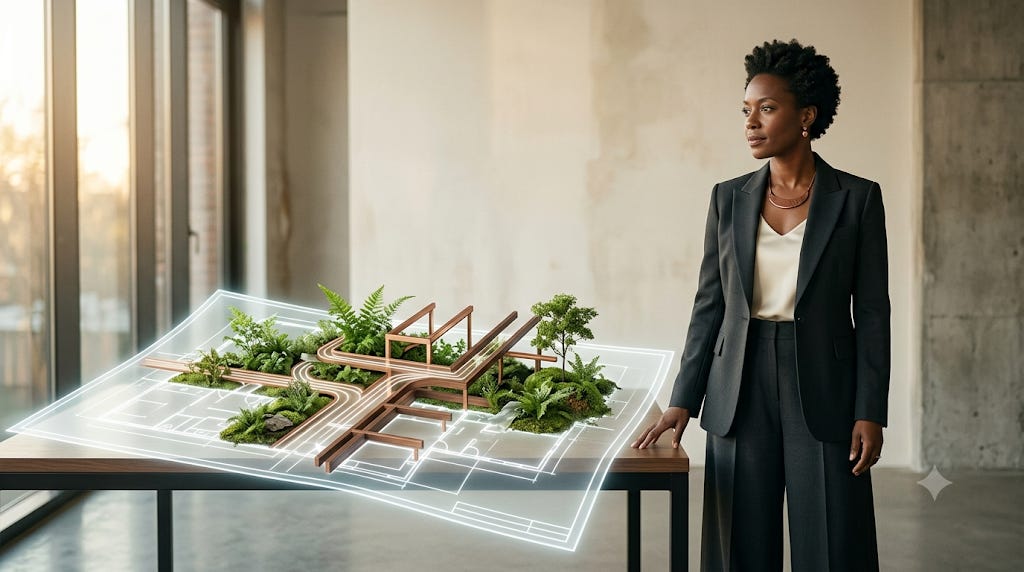
Most people think sustainable ambition is about balance.
It is not.
Balance suggests that life will naturally settle into equilibrium if we become more disciplined, optimize our schedules, or learn to manage competing priorities more efficiently. But ambitious people rarely struggle because they lack motivation. They struggle because they are operating inside systems that were never designed to sustain the outcomes they want.
Sustainable ambition is not a personality trait. It is not a productivity hack. It is not another morning routine.
It is a design practice.
Like every well-designed system, it begins with architecture rather than effort.
The Failure of Willpower
Modern culture rewards intensity.
Work harder. Move faster. Say yes. Scale everything.
That approach can create impressive short-term results. It also produces predictable long-term consequences: burnout, fractured relationships, declining creativity, reactive decision-making, and diminishing returns.
These outcomes do not occur because people lack ambition. They occur because ambition has been separated from design.
When a system is poorly designed, greater effort simply accelerates failure.
Design Before Discipline
Good designers rarely begin with execution. They begin with constraints.
They ask:
What is this system trying to accomplish?
What should happen automatically?
Where will failure naturally occur?
What must remain resilient under pressure?
The same questions apply to human ambition.
Instead of asking, “How can I do more?” design asks, “How should my life be structured so the important work becomes more likely, more repeatable, and less dependent on heroics?”
That shift changes everything.
Every Decision Builds the System
Our lives become the accumulation of repeated design choices:
Calendar architecture… Meeting norms… Communication expectations... Recovery practices... Financial buffers... Learning loops… Relationships... Physical environment.
Each element either compounds resilience or compounds friction.
Burnout often feels sudden only because the system that created it remained invisible while it was being built.
Eventually, the design reveals itself.
Sustainable Systems Produce Sustainable Leaders
Organizations frequently reward visible output while ignoring invisible infrastructure.
The highest-performing leaders often appear exceptionally disciplined. A closer look usually reveals something else: they have designed decision filters, operating principles, delegation systems, recovery rhythms, trusted teams, and clear boundaries.
The visible success is the surface expression of an invisible operating system.
Design Creates Optionality
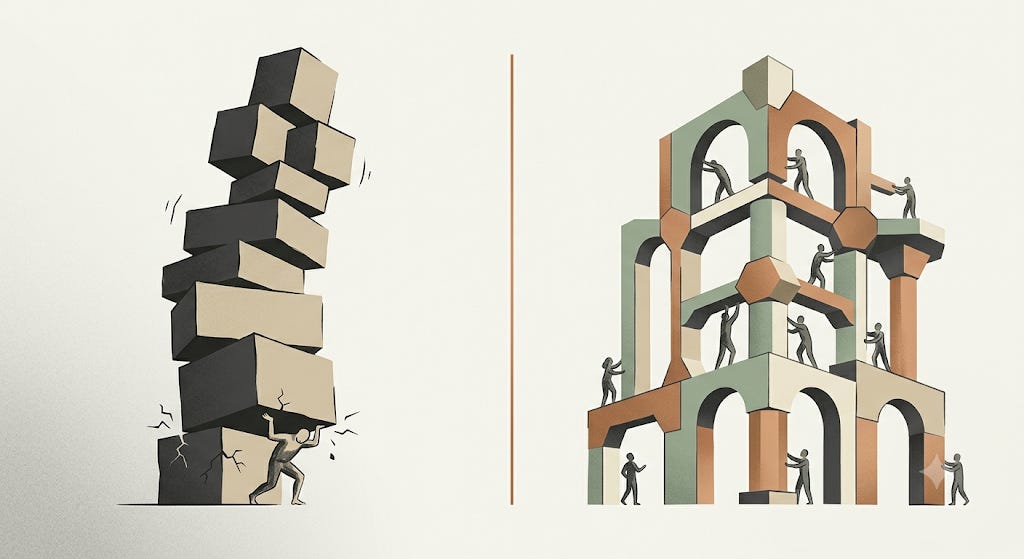
Poor systems create dependency. Well-designed systems create choice.
When every result depends on heroic effort, performance becomes fragile. When systems absorb complexity, leaders regain cognitive capacity for what matters most: thinking, creating, building, serving, and leading.
Optionality is one of the highest forms of organizational resilience.
Preserve Capability, Not Just Output
A sustainable operating system is not built around maximizing output at every moment. It is built around preserving capability over time.
Capability includes energy, judgment, curiosity, relationships, creativity, health, and trust.
These are not soft assets. They are strategic assets.
Organizations lose long-term advantage when they systematically erode the very capabilities that create value.
Design Is Never Finished
Every meaningful system drifts.
Markets change. Families grow. Technology evolves. Teams expand. Health fluctuates.
Design is therefore not a one-time exercise. It is continuous maintenance.
Architects revisit blueprints. Product teams iterate software. Cities update infrastructure. Ambitious people must do the same with the systems supporting their work.
Sustainable Ambition Is an Infinite Game
The question is not whether you can perform at an extraordinary level for six months.
The question is whether you can continue creating meaningful value ten years from now.
That requires more than motivation. It requires architecture.
Sustainable ambition is not built by pushing harder.
It is built by designing better.
And every durable legacy begins long before the visible results appear. It begins with the systems that make those results possible.