The Distance Between Care and Survival
On Acceptable Outcomes and the Life My Mother Didn’t Get
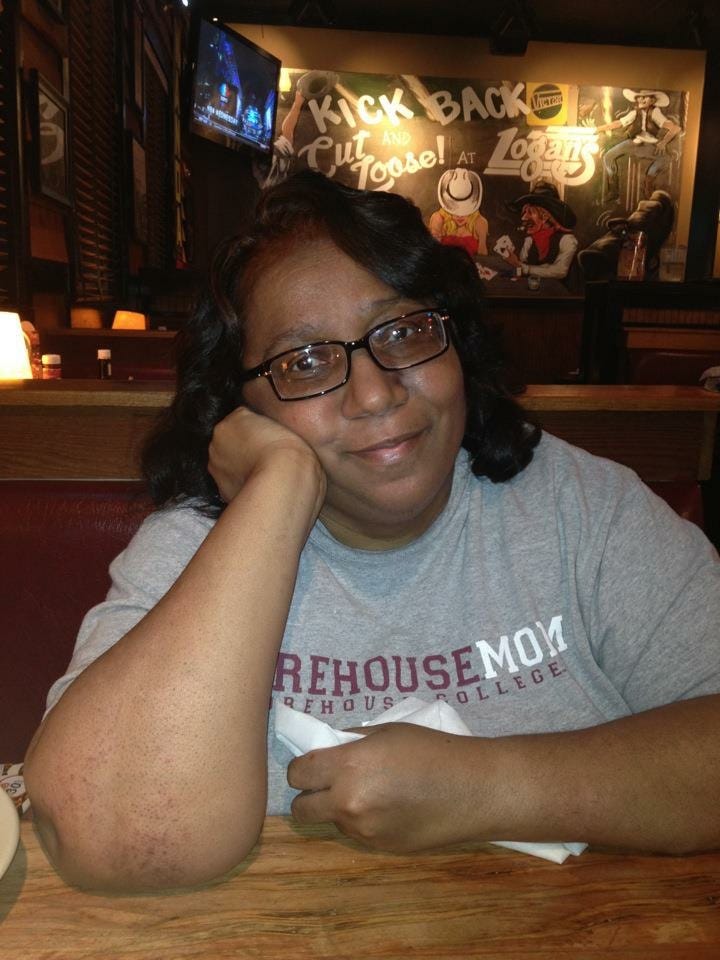
On January 16, 2026, my mother turns sixty-two.
That sentence still feels illicit to write, as though I am sneaking her back into the world through grammar alone. Sixty-two is an age that assumes continuity—energy tempered by experience, a body that knows its rhythms, a mind confident enough to choose joy without apology. It is not a milestone that belongs to ghosts.
And yet, today is her birthday.
What unsettles me most is not simply that she would have been sixty-two, but that I am now approaching the age she was when she died. She left this world in June of 2012, and for a long time, I treated that date as a sealed door—something behind me, fixed and immovable. But time has a way of undoing those illusions. I am forty now. Eight years younger than she was when she walked into a hospital expecting to come back out.
Eight years is no longer abstract. It is a planning horizon. It is a child’s entire early life. It is close enough to feel in my body.
For years, I thought grief was about absence. I was wrong. Grief is about compression—the way the distance between who you are and who they were collapses until you are forced to confront the life they never got to finish becoming.
I am older now in ways that matter. Calmer. More deliberate. I feel, paradoxically, younger than I did at twenty, when survival masqueraded as adulthood. I know what it means to arrive inside yourself. And it is impossible not to wonder what my mother might have become if she had been allowed the same runway.
This is where grief stops being sentimental and starts being political.
My mother did not die in a blaze of mystery. She did not fall victim to some unknowable twist of fate. She went to the hospital in Tennessee with what most people would consider a minor issue—a sore throat—and she never came home.
That sentence is as plain as it sounds. It is also the heart of the problem.
In this country, going to the hospital is supposed to be an interruption, not an ending. You go in to be stabilized, treated, and sent back to your life. That expectation is so basic that most people never think to question it—until it fails them.
After my mother’s death, we did what families do when something feels wrong but has already been made final by paperwork and silence: we asked questions. We tried to understand whether what happened to her should have happened at all.
What we learned was chilling in its simplicity.
We were told—without drama—that we could not meaningfully compare the care she received to what would have been expected in places like Illinois or California. The standards were different. The expectations were lower. The threshold for urgency was narrower. In other words, if she had been somewhere else, yes, she should have survived. Where she was, the outcome was considered acceptable.
Acceptable.
That word did more damage than any medical explanation ever could. Because it revealed something we rarely say out loud: this country quietly tolerates multiple standards of care, and therefore multiple standards of survival. And those standards are not randomly distributed.
States like Tennessee, Mississippi, and Arkansas are among the poorest in the country. Poverty does not only constrain income; it constrains knowledge. It constrains expectation. It quietly teaches people not to ask for what they have never been shown is possible.
If you grow up in a place where underfunded systems are normal, you are less likely to know that medicine behaves differently elsewhere. Less likely to know that what is routine in one state is exceptional in another. Less likely to know that a sore throat should not be fatal.
You are not told at birth that the margin for error attached to your body will depend on geography and income intersecting in predictable ways. There is no disclosure. No warning. Just consequences.
So the failure does not begin at the hospital door. It begins much earlier. It begins with a map, an economy, and a quiet permission structure that allows some places to expect less—even when the cost is life.
There is an uncomfortable tension here, and it deserves to be faced directly.
We speak as though we live in a post-federalist reality, where states govern themselves, and outcomes vary accordingly. But that logic collapses the moment these systems take federal money.
Hospitals are not purely local institutions. They are sustained by Medicare. By Medicaid. By federal reimbursements. By public dollars collected across state lines.
Once that money is accepted, this is no longer about autonomy. It is about obligation.
If an institution is funded in the public’s name, then the public is owed something in return. At the very least, a baseline standard of care that does not change your odds of survival based on where you happen to live.
Anything less is not decentralization. It is abandonment.
The cruelty of this system is how ordinary it has become. When you go to a hospital—the only place you can go for certain kinds of care—you often have to pay to park. You pay taxes that fund the system. You pay insurance premiums. You pay co-pays. And then you pay to enter the building.
You pay to be treated.
You pay to wait.
You pay to suffer.
And sometimes, you pay to die.

The layers accumulate so quietly that we stop noticing how absurd they are. How incompatible they are with the language we use to describe ourselves as a nation.
We talk about liberty. We talk about justice. We repeat the phrase “the pursuit of happiness” as though it were self-executing. But it is difficult to reconcile that promise with a system in which staying alive requires navigating fees, geography, income thresholds, and information gaps that most people were never given the tools to overcome.
What is the pursuit of happiness if not the ability to be healthy enough to enjoy your life?
What is liberty if survival depends on living in the right state and earning enough money to stay there?
What does justice mean if institutions funded in our name are allowed to deliver radically different outcomes for the same conditions?
I understand all of this differently now because time has removed the buffer. When you move close to the age atwhich someone you love ran out of time, abstraction disappears. Risk stops being theoretical. Questions sharpen.
You start asking where the floor is higher.
You start asking which systems are built to catch you.
You start asking what happens if you don’t get lucky.
That is how I came to live in California.
I never thought I would. For a long time, it felt like something other people did—people with different money, different margins, different assumptions. But adulthood has a way of stripping illusion from decision-making. What remains is the consequence.
In places like California, New York, or Illinois, the most common medical crises are treated as exactly that: common, manageable, survivable. Continuity is the expectation. Elsewhere, with rare exceptions—Minnesota comes to mind—the same crises become gambles. Not loud ones. Quiet ones. The kind you don’t realize you’re in until it’s too late to step out.
Living with that knowledge doesn’t make you fearful. It makes you exact.
I am not interested in gambling with my life.
That clarity deepened when I became a parent. Once someone depends on you to continue to exist, the cost of error is no longer hypothetical. It has a face. It has a future. It assumes you will be there.
I want to be here for my son. I want to watch him become himself. I want to do the work I am doing without the constant awareness that my survival is contingent on luck, location, and income.
And it is deeply wrong that this requires a strategy.
That in order to feel reasonably confident that I will survive what most people consider routine, I have to live in a specific state.
I have to earn enough money to stay here.
That safety itself has been turned into something you purchase rather than something you are owed.
We call this choice. We call it preference. We call it lifestyle.
It is none of those things.
It is survival quietly converted into a socioeconomic achievement, while the people who cannot relocate, cannot afford the cost of living, cannot escape their geography, are told—implicitly—that this is unfortunate but normal.
And it is here that my mother’s story returns—not as anecdote, but as proof.
My mother died in a system that knew how to save her. It simply did not require itself to do so in the place and under the conditions where she lived.
And what was taken was not only her life.
What was taken was her future relationship with my son. The grandmother who would have been his loudest cheerleader. The woman who praised people out loud, who wanted everyone to win, who belonged to more than just us.
We called her Mama. People called her Mama. More specifically, they called her Mama Suzi—S-U-Z-I—because she showed up that way. Our lives were steadier because she was a part of them. Other people’s lives were too.
Loving my son has made this loss sharper, not softer. I understand now what it means to go into a hospital “for something small” while carrying a life that depends on you coming back out. I can imagine my mother thinking exactly what I would think now: I just need to get this handled. I have people waiting for me. I have more to do.
No parent chooses to leave.
The cruelty is not only that she didn’t get to stay. It’s that the rest of us had to reorganize ourselves around her absence. Loss like this teaches you, slowly, that stability is conditional.
We often talk about death in terms of what the living miss. That framing is incomplete. The real damage is exponential. A single life removed alters the emotional geometry of everyone nearby.
There are versions of me—lighter, steadier—that never had the chance to exist because my mother did not get the care she needed, in the place and conditions where she happened to live.
And this is not unique to us.
This country is filled with families carrying parallel losses, quietly explained away by geography, poverty, and policy choices that are treated as natural rather than deliberate.
It is not.
If we are going to claim greatness as a nation, then the standard cannot be excellence for some states and survivability for others. It must be simpler than that, harsher than that: anyone should be able to walk into a hospital anywhere in this country and survive what most people would consider a routine illness.
Anything less is not a tragedy.
It is policy.
On this day—January 16, 2026—my mother should be sixty-two. She should be making plans. She should be celebrating loudly. She should still be cheering us on.
She is not. And I cannot let that stand as merely sad.
This is the kind of loss that demands something from the living. It demands clarity. It demands memory sharpened into insistence.
I love my mother more now than I did when she was alive. I admire her more now that I understand how much life she was denied. And I honor her best not by quiet remembrance, but by refusal.
Refusal to accept a country where survival depends on your state and your income.
Refusal to normalize systems that quietly decide who gets to live.
Refusal to move on without accounting for what was stolen.
Some things are not meant to be endured.
Some things are meant to be confronted.
And this—this is one of them.